Tufa Cast Jewelry by Emilio Vigil
Every piece on this page was cast in a mold of volcanic tufa stone that Emilio Vigil carved by hand in Taos, New Mexico. He has been a silversmith for more than twenty years. Because a tufa mold rarely survives more than one pour, each piece is one of a kind.
The pieces
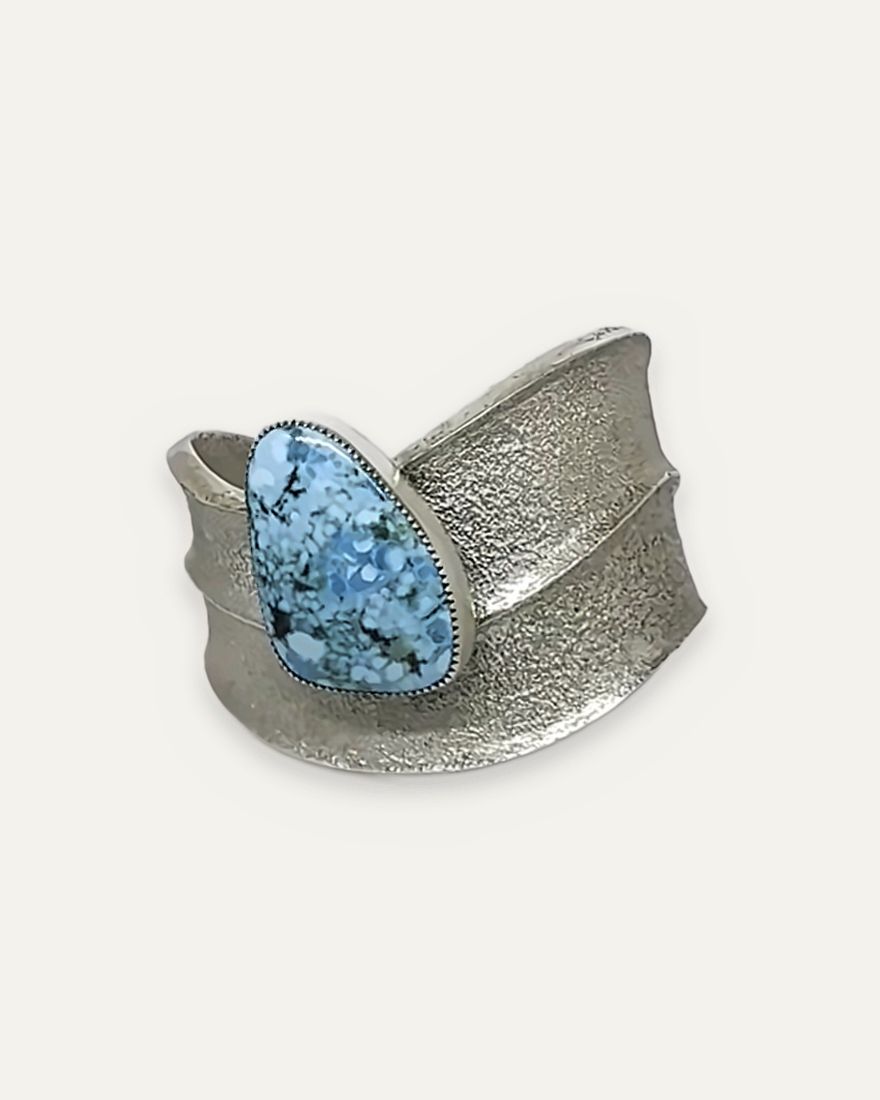 Kingman Red Web Turquoise Tufa Cast Cuff$1,500
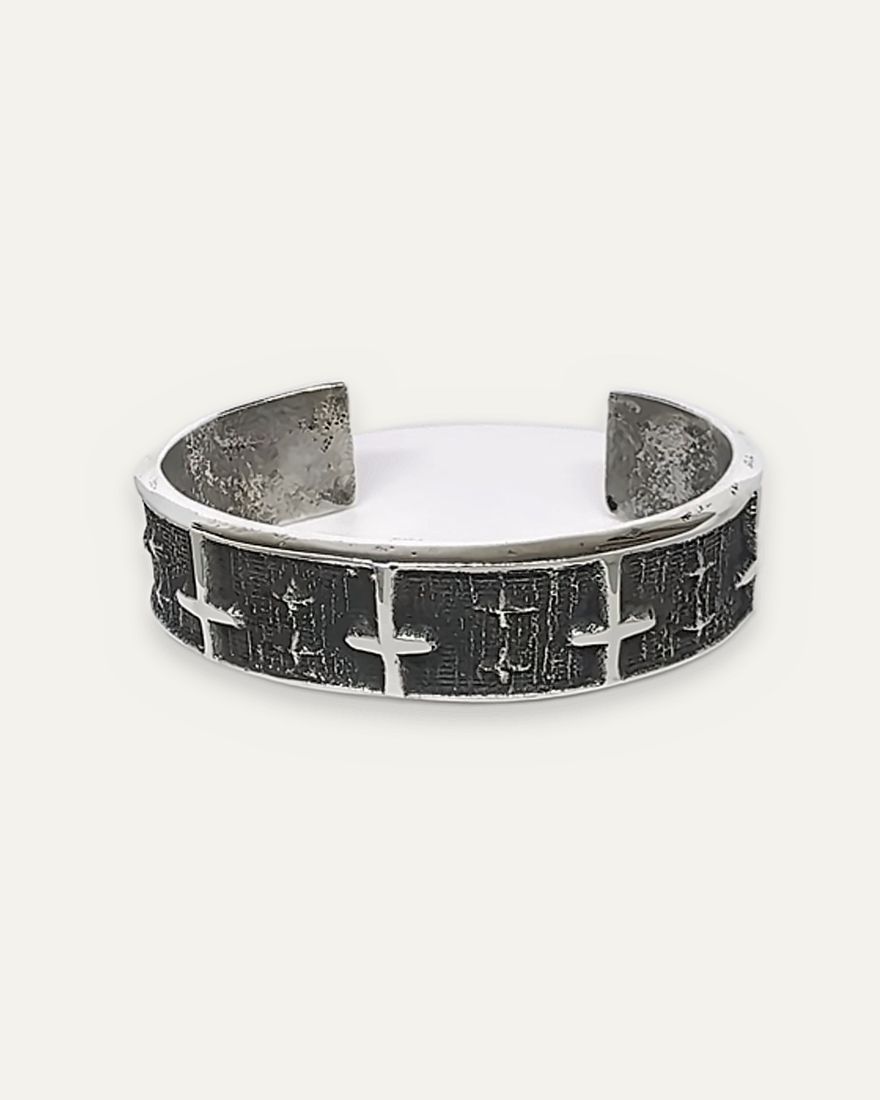 Wide Tufa Cast Cross Cuff$1,250
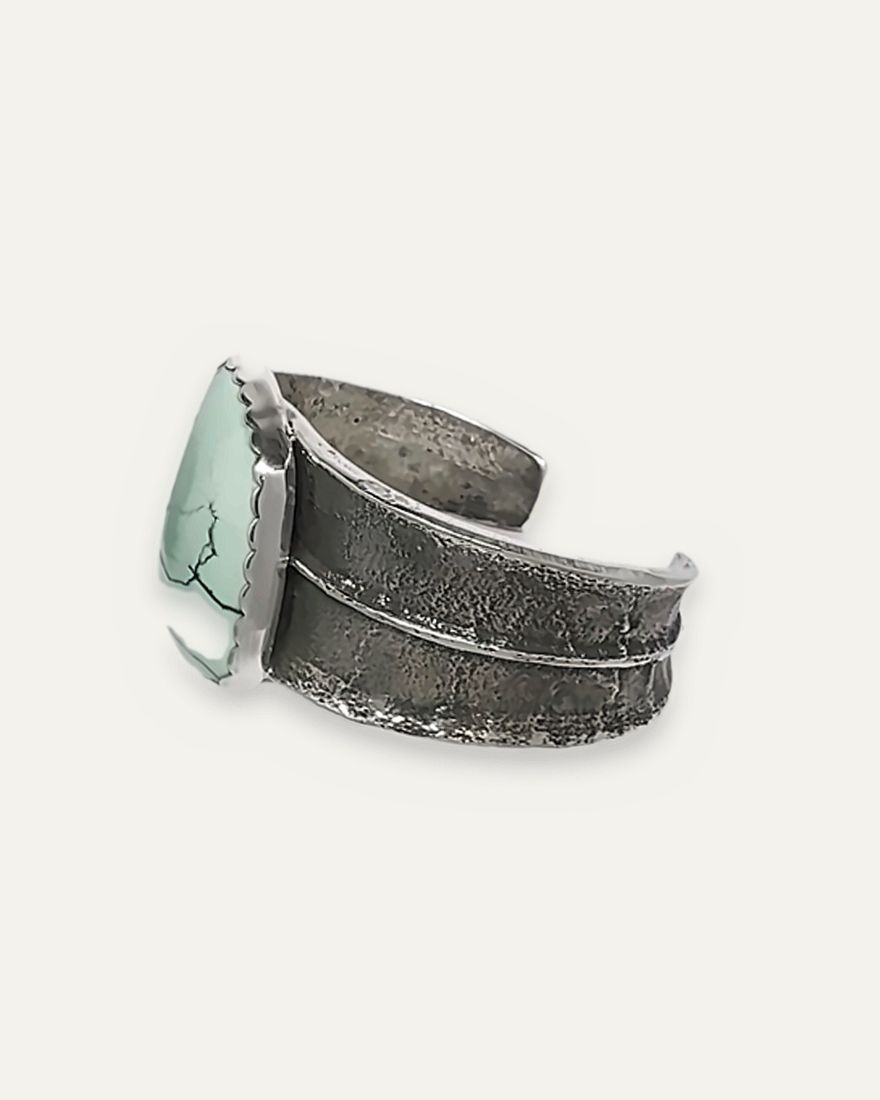 Tufa Cast Ridge Cuff with Spiderweb Stone$975
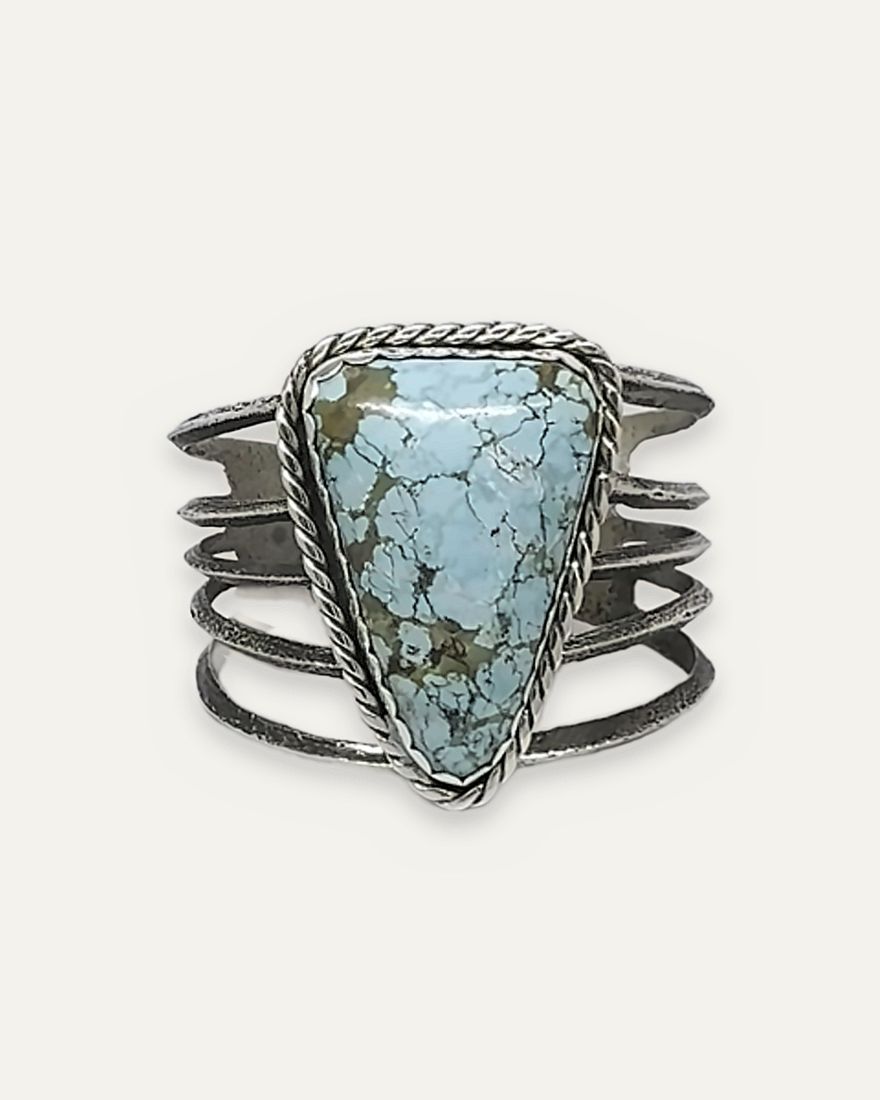 Number 8 Turquoise Tufa Cast Cuff$850
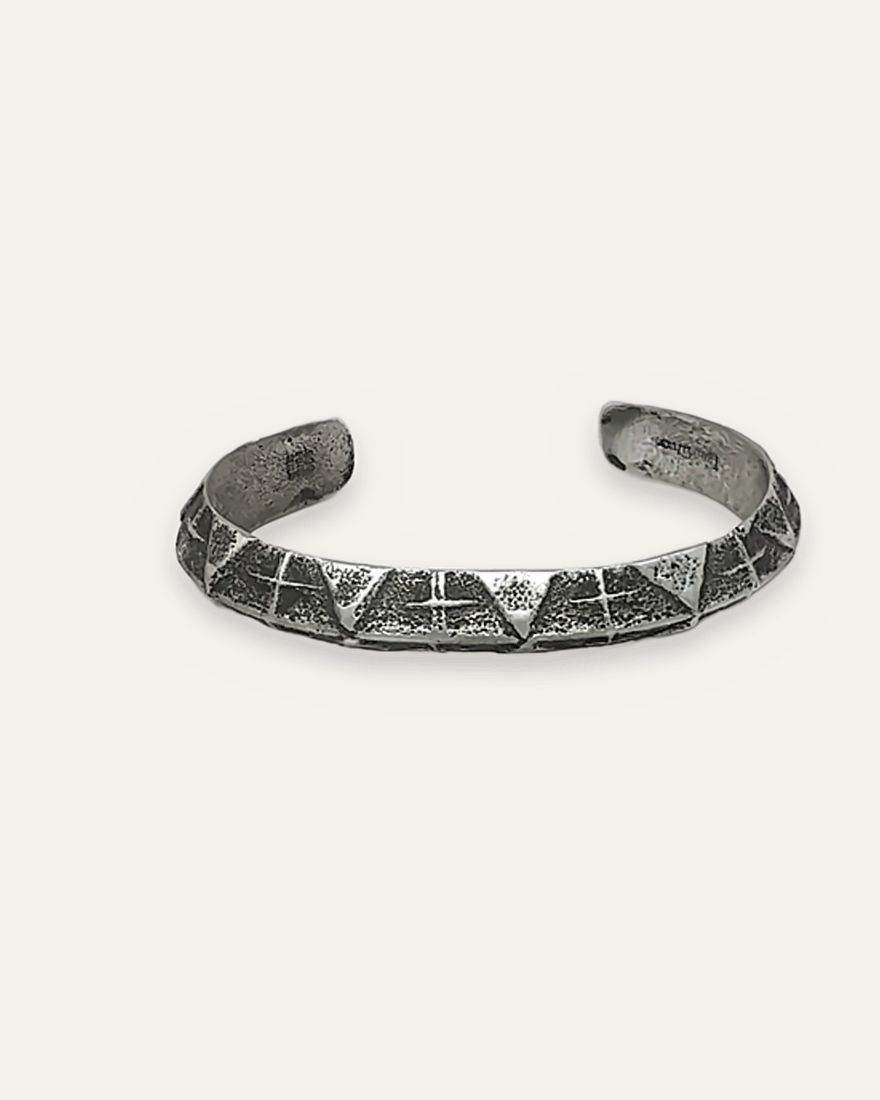 Faceted Tufa Cast Cross Cuff$750
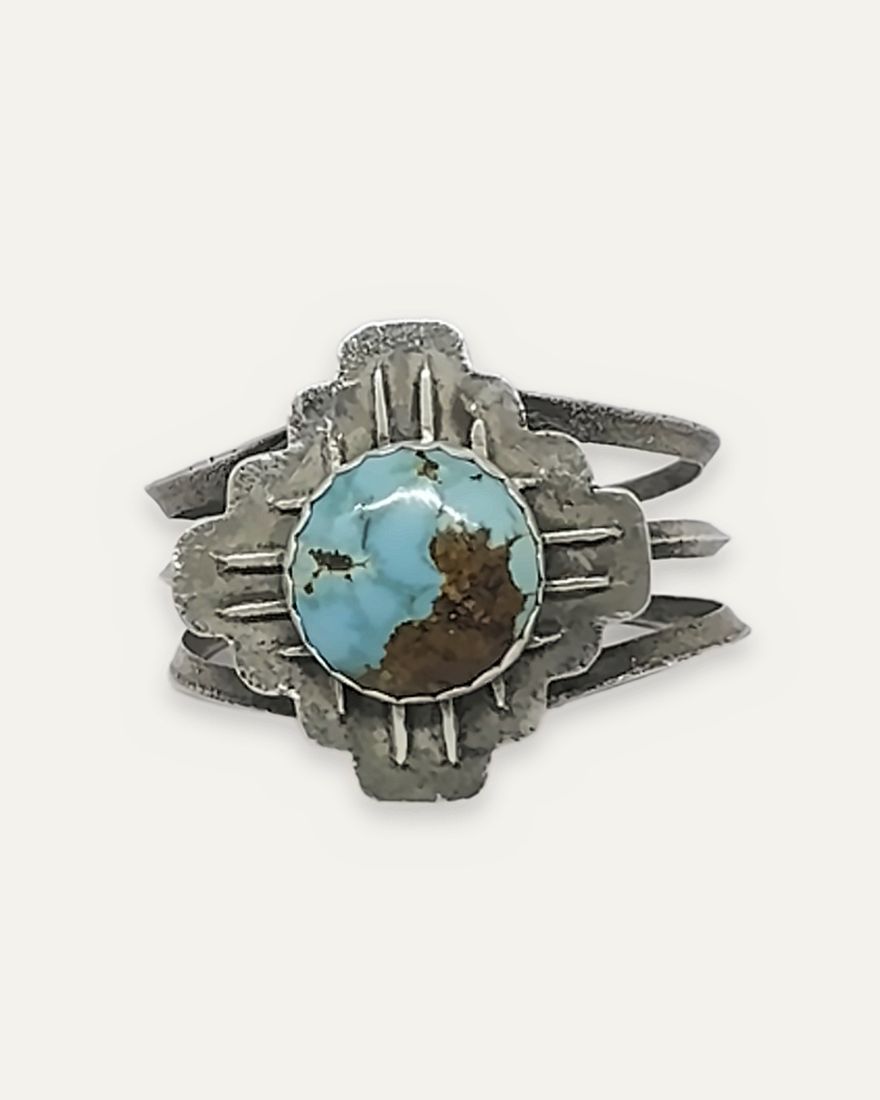 Kingman Web Turquoise Tufa Cast Cuff$710
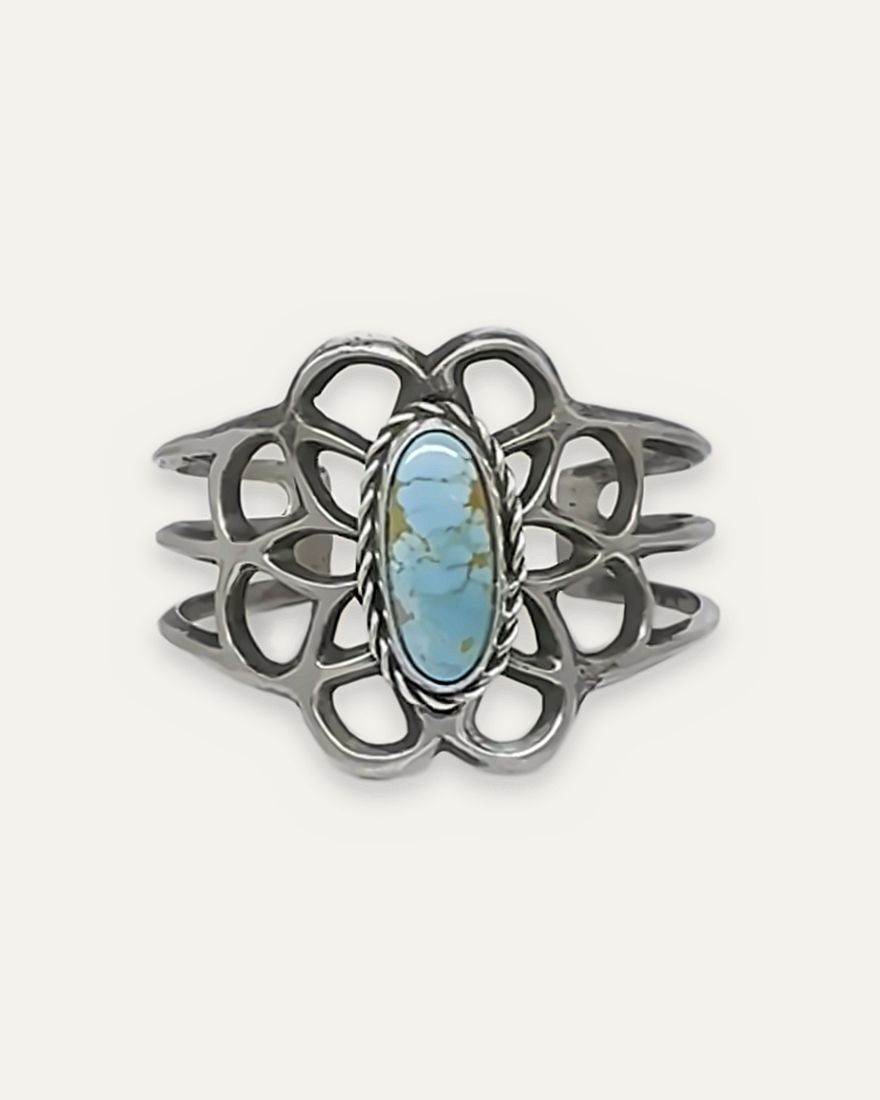 Turquoise Three-Band Tufa Cast Cuff$675
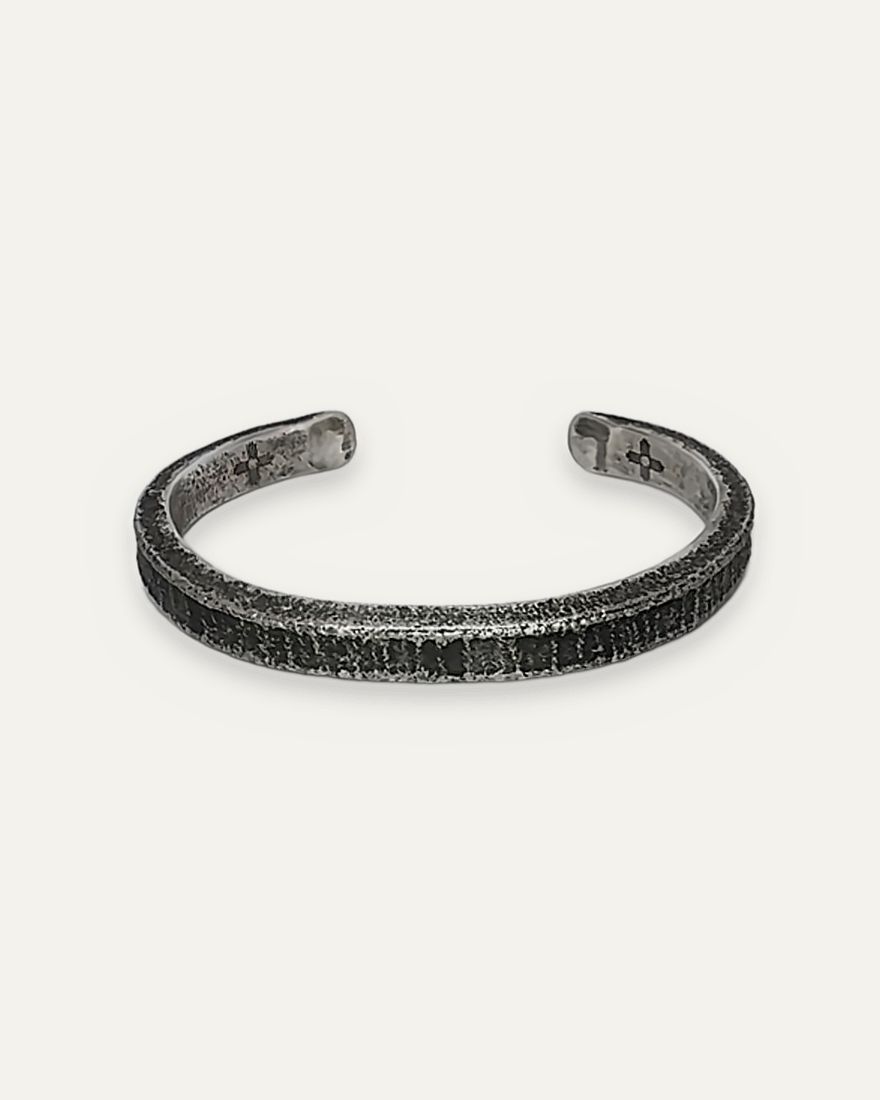 Textured Tufa Cast Cuff$575
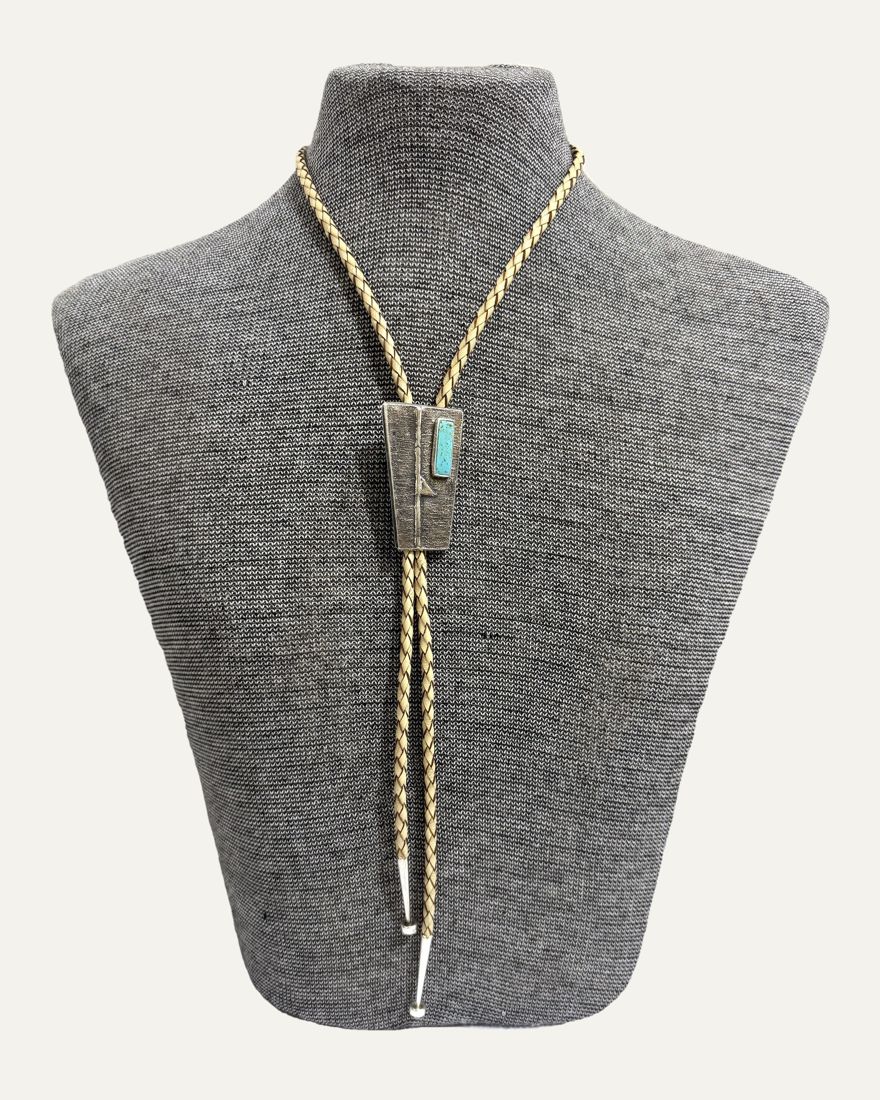 Tufa Cast Slide Bolo Tie with Turquoise$575
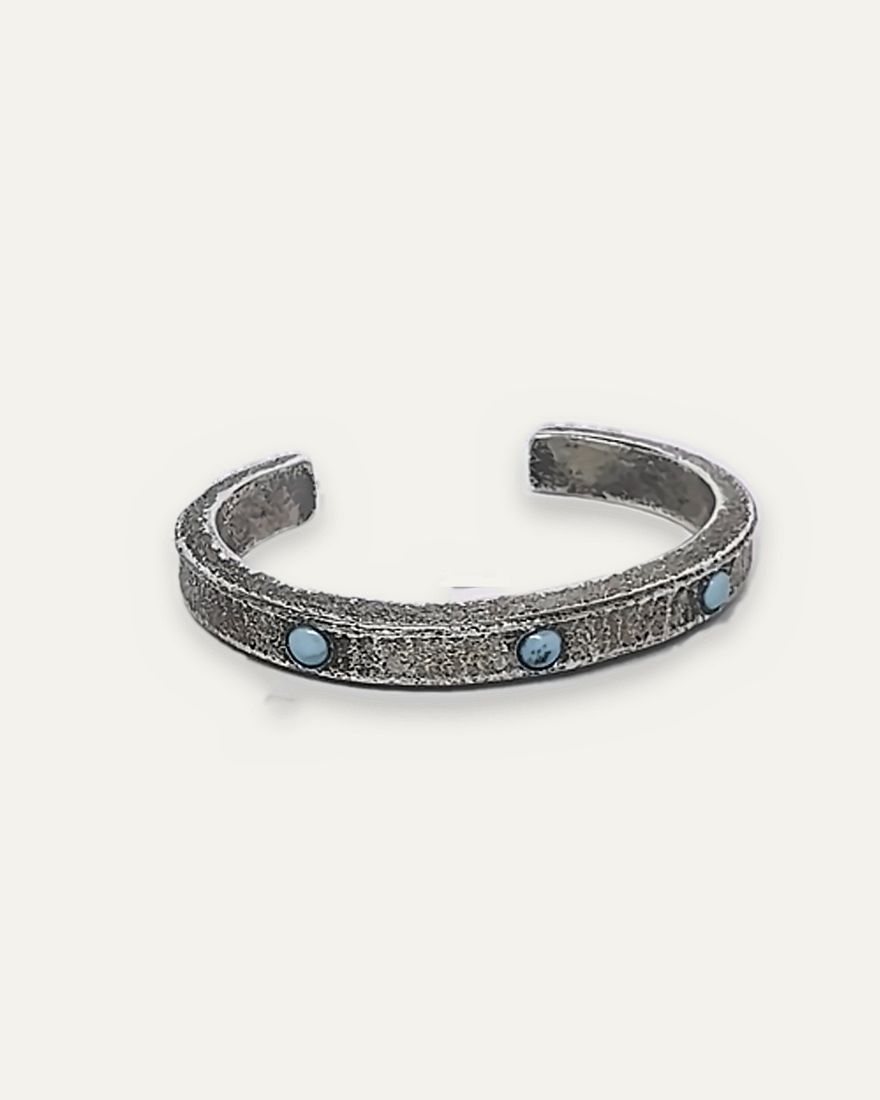 Tufa Cast Cuff with Turquoise Dots$525
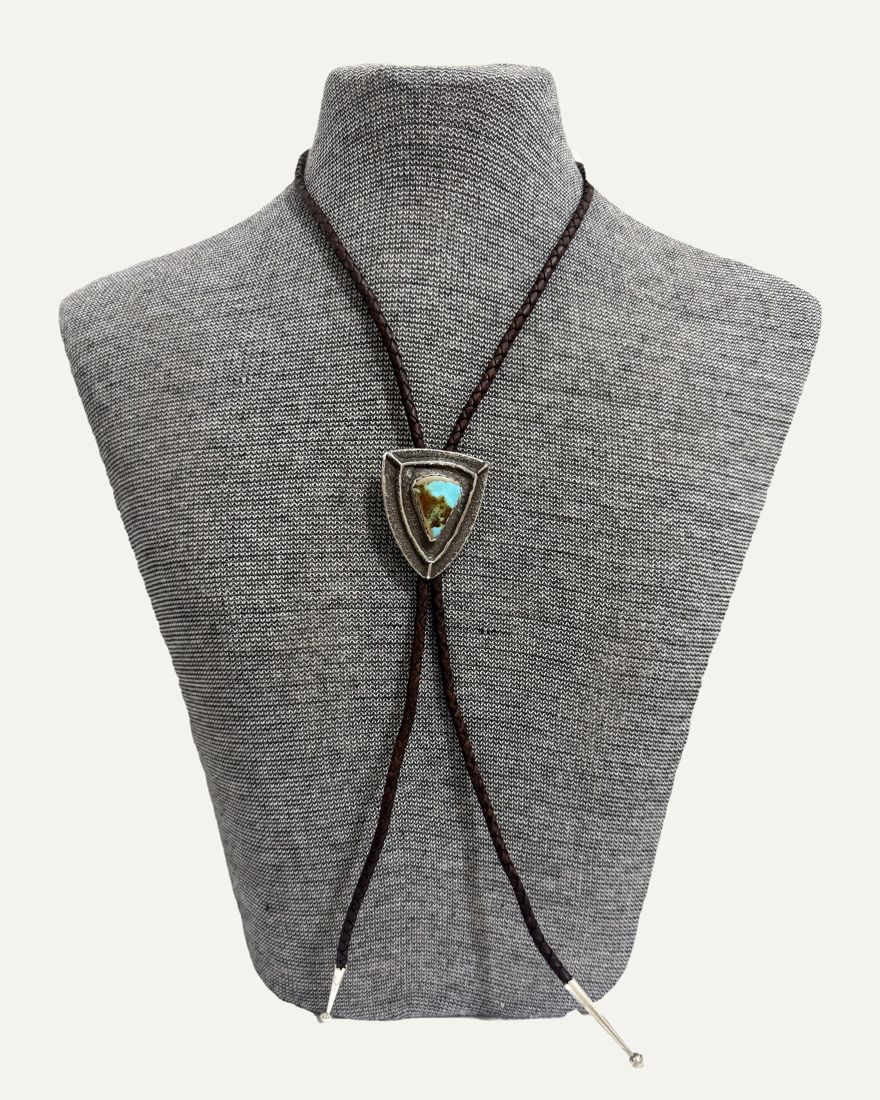 Tufa Cast Shield Bolo Tie II$525
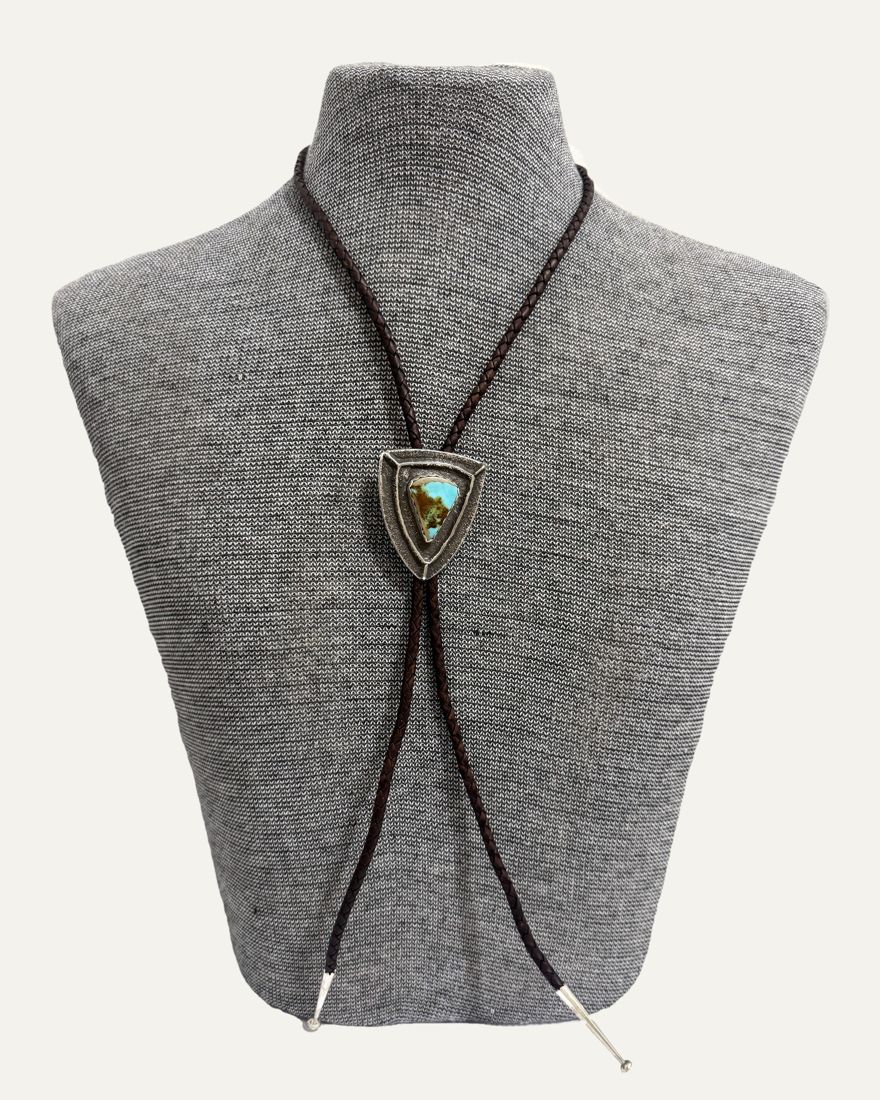 Tufa Cast Shield Bolo Tie$525
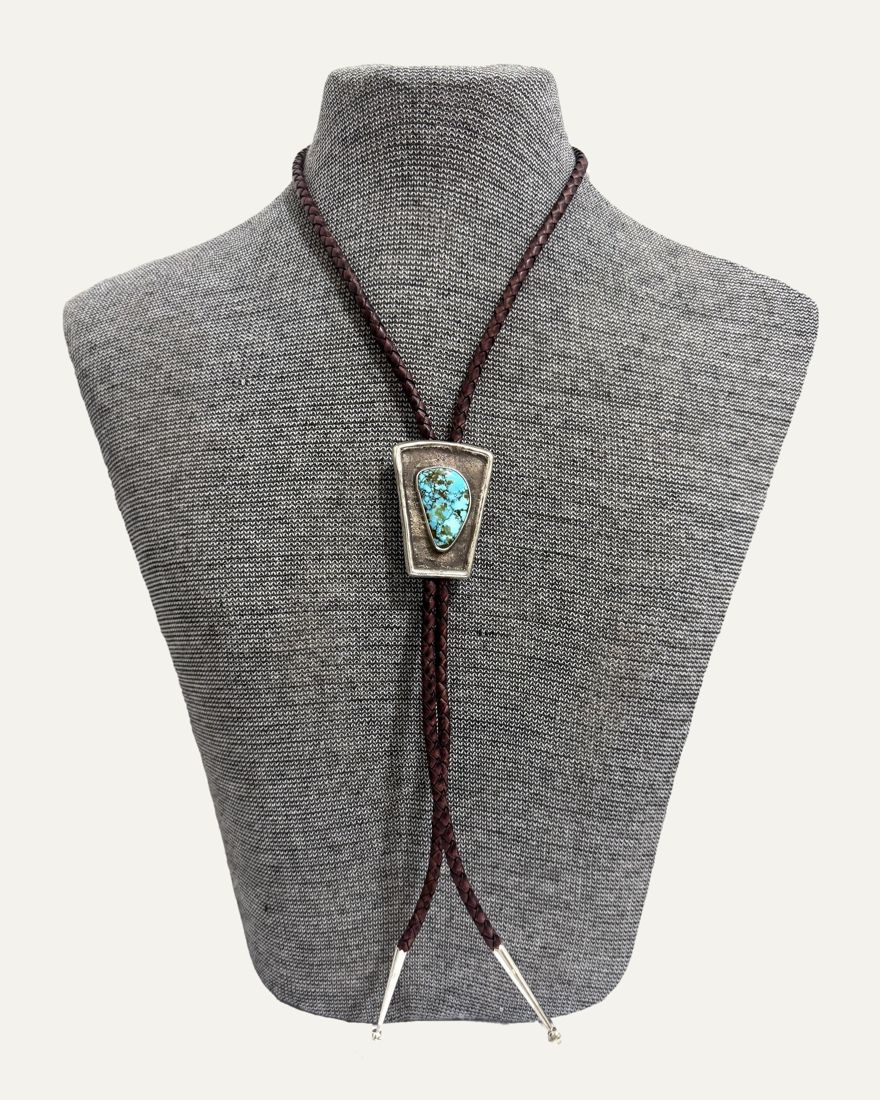 Kingman Red Web Turquoise Bolo Tie$475
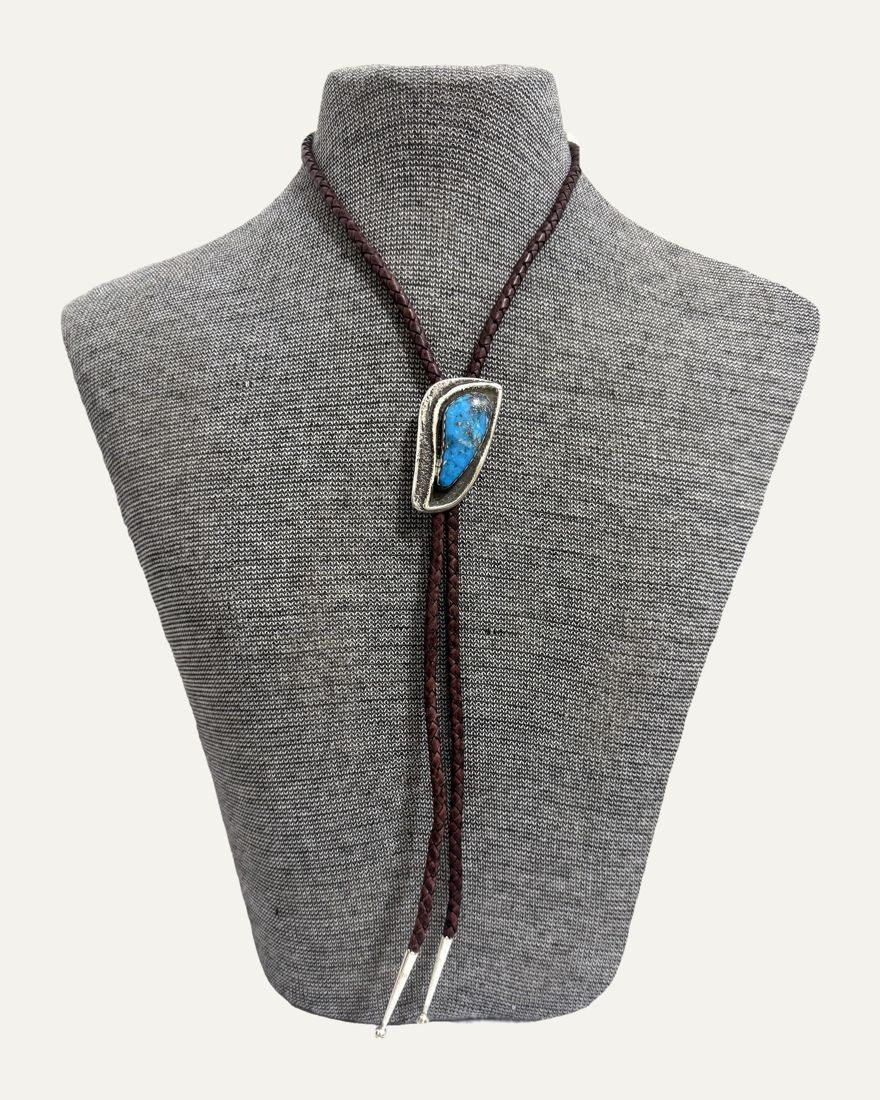 Tufa Cast Turquoise Bolo Tie$475
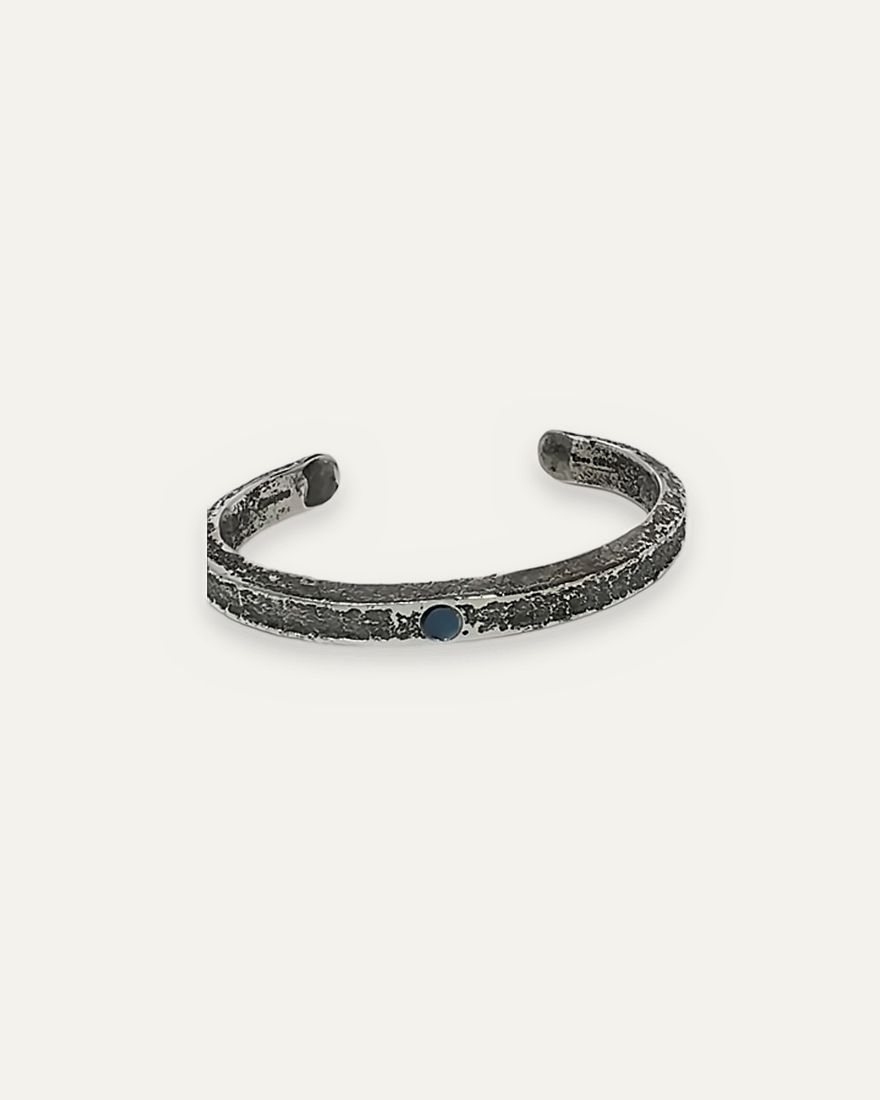 Thin Tufa Cast Turquoise Cuff$425
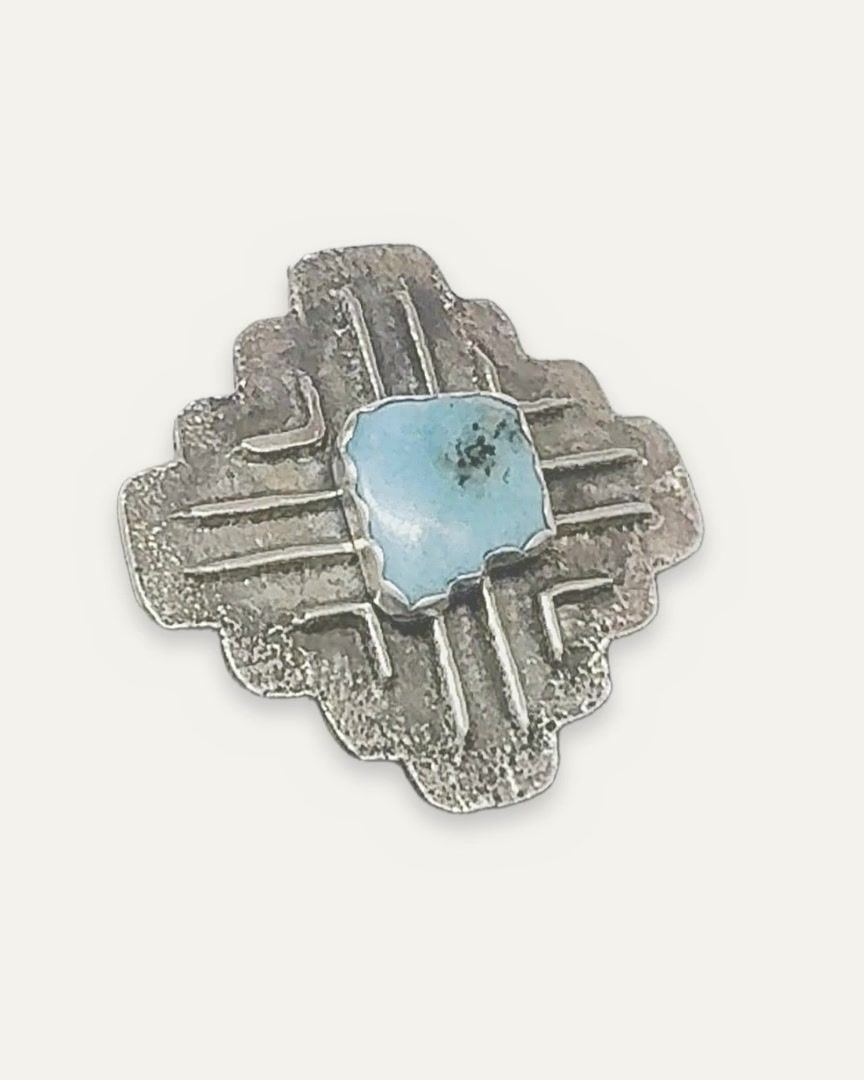 Tufa Zia Turquoise Shadowbox Ring$420
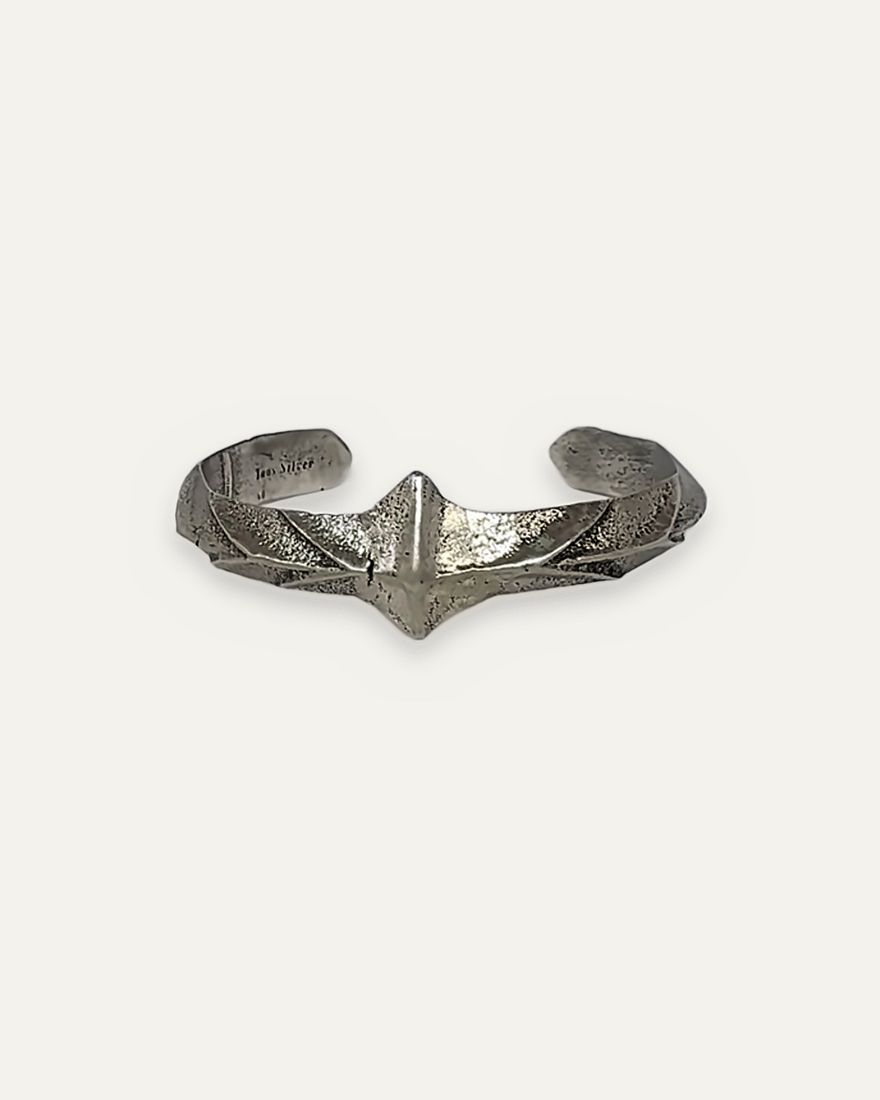 Tufa Cast Star Cuff$375
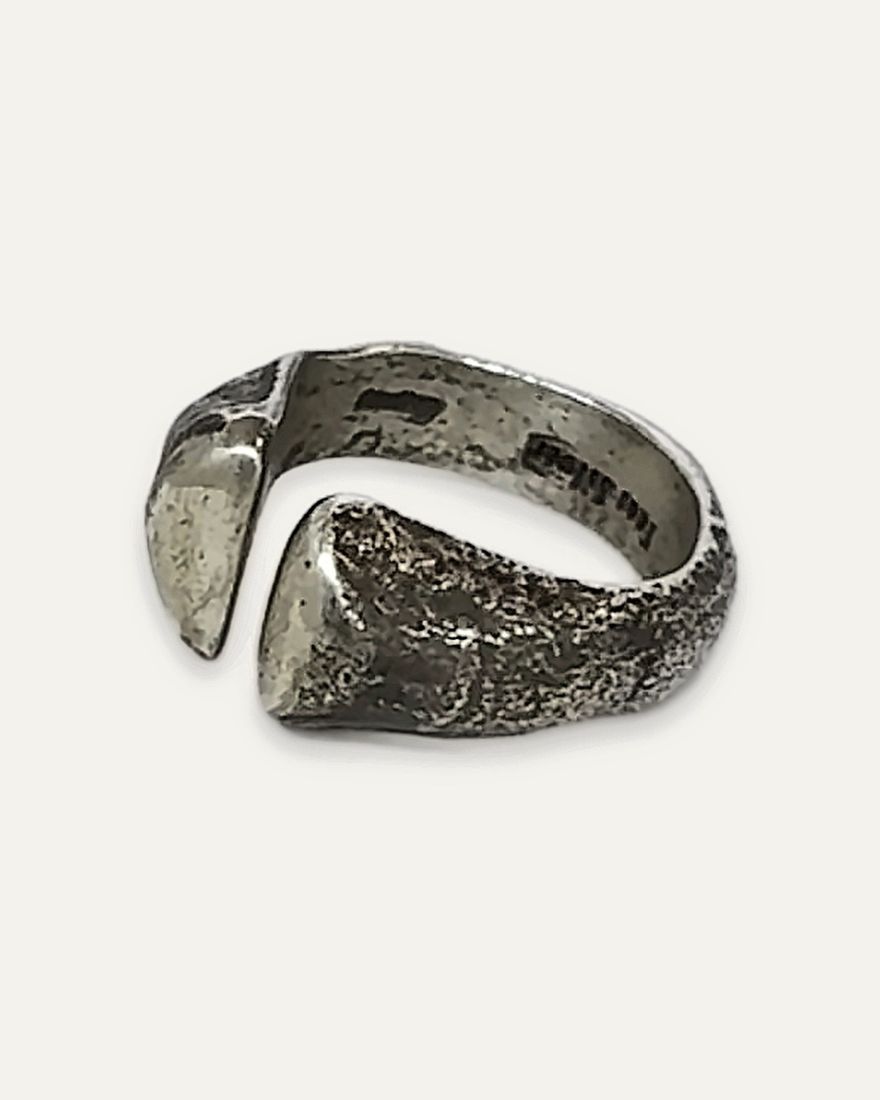 Tufa Cast Band$325
What is tufa casting?
Tufa is a soft, porous stone formed from compressed volcanic ash. It is soft enough to carve with hand tools, and its grain is what gives tufa-cast silver its rough, sandy texture.
To make a mold, the silversmith cuts a block of tufa in two and rubs the halves together until they meet flat. The design is carved in reverse into one face, along with a funnel at the top for the metal and thin channels to let air escape. The halves are bound together, sterling silver is melted, and it is poured into the funnel. When the silver cools and the mold is opened, the casting comes out carrying the grain of that particular stone.
The heat of the pour usually cracks or wears down the carving, so a tufa mold rarely makes a second piece. That is why no two tufa-cast cuffs, rings or bolo ties are alike. After casting, the piece is cut free, filed, shaped (a cuff is bent around a mandrel), set with its stone, oxidized to darken the texture and polished so the raised edges shine.
How Emilio Vigil works
Emilio Vigil carves his own tufa molds and casts every piece himself in Taos. Each design is carved once, poured once and finished by hand, then set with natural turquoise or other stones. The stone and its source are listed with each piece.
Caring for tufa-cast silver
The dark recesses of the texture are part of the design. Polish only the raised surfaces with a soft silver cloth, and avoid dips or harsh cleaners that would strip the oxidation from the grain.